
Showing posts with label leadership. Show all posts
Showing posts with label leadership. Show all posts
Monday, June 4, 2012
Motivate Students With Long Term Goals

Monday, April 23, 2012
Motivate Students by Achieving Short Term & Daily Goals
| Program preparation feels a lot like this, but every day counts. What do students feel they've accomplished when they leave each day? |
Monday, April 16, 2012
Motivate Students by Creating Structure

Tuesday, January 3, 2012
Three More Tips to Make Your Next Concert a Hit
| When I grow up, I want to play on a stage with that cool of a backdrop! |
Keep Dead Time to a Minimum
If there's one thing that kills momentum, it's the time it takes for one band to leave the stage while another one sets up and gets ready to go. Find ways to keep this dead time to a minimum.
Thursday, December 29, 2011
Three Tips to Make Your Next Concert a Hit
I recently survived my first winter concert, and I'm happy to report it was a smashing success. I'm in the of
rebuilding a program, and winter concerts in previous years were not taken very seriously. Students were allowed to dress casually and wear Santa hats on stage. The audience, from what I'm told, talked during the music. Kids and parents of younger bands left after their kids performed, leaving hardly an audience by the time the high school band took the stage.
My vision of a winter concert was completely different. In this small town, the high school band is as close to a professional symphony orchestra as they'll probably ever have. I wanted a concert with quality musical programming and an elegant presentation, or at least presented to the best of our ability. I poured a ton of energy into the presentation as well as the music, and it definitely contributed to the concert's success. Here are some of the things we did that you might be able to use, if you're not already doing them:
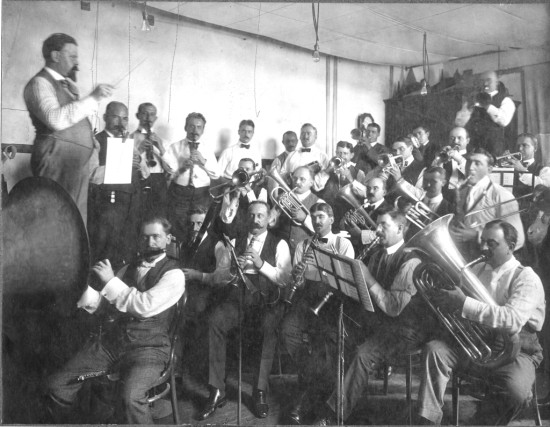 |
| These gentlemen understood how to put on a classy performance! |
rebuilding a program, and winter concerts in previous years were not taken very seriously. Students were allowed to dress casually and wear Santa hats on stage. The audience, from what I'm told, talked during the music. Kids and parents of younger bands left after their kids performed, leaving hardly an audience by the time the high school band took the stage.
My vision of a winter concert was completely different. In this small town, the high school band is as close to a professional symphony orchestra as they'll probably ever have. I wanted a concert with quality musical programming and an elegant presentation, or at least presented to the best of our ability. I poured a ton of energy into the presentation as well as the music, and it definitely contributed to the concert's success. Here are some of the things we did that you might be able to use, if you're not already doing them:
Monday, June 13, 2011
How to Organize a Music Library
Hello again!
 You're probably not looking for a summer project, but if your music library isn't well organized, it would be a project well worth your time. Last time I talked about the four steps to organize any space, and in this blog we're going to apply those steps to the music library.
Have you ever needed or wanted to find a piece of music and found you had to go digging around in cabinets where pieces were not kept in a particular order, or that you had to go digging around in piles of music that were not yet organized? I have even seen libraries and offices where sheet music lay strewn about on the floor!
Hey, I'm not making any judgments here. What I am saying is that your time is valuable, and our goal is always to push ourselves to accomplish more for the program in the same amount of time. If your library isn't well organized, then this is something that is no doubt eating up your time. Perhaps you've even had to pause class because someone was missing a part, and then you either had to go find it or send a student to go find it (while other teachers have procedures to do these things outside of class, in either case somebody isn't playing for a while).
The bottom line is this - having a well organized music library will save you time. Not only that, but it will contribute to a clutter free environment, which not only helps your students to have more respect for the program, but it also reduces your stress level!
Thursday, June 9, 2011
Four Steps to Organize Any Space
Hello again!
One of the great challenges of managing any program, like a band for example, is keepings things organized. One of the gentlemen I met this past semester, who goes around and sees many band halls, said to me, "The only time your office will be organized is on the first day, and after that...."
Indeed, particularly when you walk into a situation where things are a giant mess, it is difficult and time consuming to sort through it all and get it organized. Even after it's organized comes the challenge of keeping it organized. I understand.
My wife and I live in a small apartment, and at one point we had way more things than we had space for. We still do. But at a certain point I was getting stressed from the clutter. So I went out and bought a book, as I always do. This one was called Organizing for Dummies. This book will tell you how to organize everything, from your work desk to your desk top to your time, to any space you can imagine. I got to work, and one space at a time, day by day, the apartment transformed.
 |
| Do you need to organize? |
Indeed, particularly when you walk into a situation where things are a giant mess, it is difficult and time consuming to sort through it all and get it organized. Even after it's organized comes the challenge of keeping it organized. I understand.
My wife and I live in a small apartment, and at one point we had way more things than we had space for. We still do. But at a certain point I was getting stressed from the clutter. So I went out and bought a book, as I always do. This one was called Organizing for Dummies. This book will tell you how to organize everything, from your work desk to your desk top to your time, to any space you can imagine. I got to work, and one space at a time, day by day, the apartment transformed.
Wednesday, December 29, 2010
Goal Setting and Achievement
Hello again!
In the spirit of New Years I thought I could reflect on my goals from this past year. Most music students and teachers are pretty good at setting goals, and nothing here is original, but hopefully something here can help someone out there to set and achieve their own goals for 2011. After all, I don't mean to brag, but 2010 was a pretty amazing year of achievements for me. Of course, I didn't accomplish everything I set out to, but who does? You live and you learn, right?


In the spirit of New Years I thought I could reflect on my goals from this past year. Most music students and teachers are pretty good at setting goals, and nothing here is original, but hopefully something here can help someone out there to set and achieve their own goals for 2011. After all, I don't mean to brag, but 2010 was a pretty amazing year of achievements for me. Of course, I didn't accomplish everything I set out to, but who does? You live and you learn, right?
Set SMART Goals
Have you ever heard of SMART goals? It's a method that really works, especially if you don't have much previous goal setting experience, or haven't had much success in achieving your goals (which was sometimes the case for me). For those who aren't familiar, SMART is an acronym that can mean a few different things. In the book "Strategic Planning for Dummies", it is geared towards planning and implementation for an organization, so it looks something like this:
S - Specific: If you say, "I want to lose weight", that is too broad. Specific is measurable. "I want to lose 40 pounds."
M - Measurement: How will you measure success? In the above example, it was by pounds lost, with 40 being the goal.
A - Attainable: Find a point that will challenge you, but still be realistic to achieve. If you're building on a strength, you can push further than if you're building on a weakness. In this case I figured 3-4 pounds a month was conservative, but at least it was achievable.
R - Responsible Person: In an organization, goals should be delegated. This would be an important step when setting goals for a program, or as a booster club. Just because one person is responsible doesn't mean they shouldn't have help.
T - Time Frame: What are the start and end dates for this endeavor? Again, from an organization standpoint, this can be quite helpful. You can't do everything for the year at once. Mapping out your goal time frames for the year allows you to spread out the work, while keeping you on track by making sure you're not starting anything too later.
At the ASU Brass Festival I got to hear a masterclass/performance by the Boston Brass. The trombone player's segment of the masterclass was on goal setting, and he discussed SMART goals, except that the wording was more geared for individuals. I like it, and I wanted to share both. Of course it's not much different.
S - Specific
M - Measurable
A - Achievable: Same as Attainable.
R - Resources: List all of the resources at your disposal. Although it wasn't in the SMART model above, when I set my weight loss goal, I did this. Resources could be books, friends, facilities, the internet, whatever you can think of. In the case of my weight loss, one of my good friends transformed his body in two years from being obese to being the most athletic person I know, with a body fat percentage of around (I think) 12%. Once he got down to 150 pounds, he put on 20 pounds of muscle, and I'm sure even more since then. I knew he would be a great source of information and encouragement. I had a couple of books with exercises, educational material, and routines to reteach myself proper work out techniques. I also used the internet to get additional food ideas, as well as get rough calculations of how many calories I naturally consumed so I'd have an idea of how many calories to take in each day for weight loss. After a couple of weeks I also bought a scale at home because I got tired of walking over to HEB to weigh myself.
T - Timely: For individual goals, it's also important that your time frame be realistic. My time frame of 40 pounds in a year seemed a little like underachieving, but my confidence in my ability to get active and lose weight was also pretty low. If I would've said, "I want to lose 40 pounds in a week", that probably would have been an unrealistic expectation. At that weight, 40 pounds was an achievable goal, but the time frame of a week would not have been. Had I given myself 2-20 years to lose 40 pounds, I might have quickly lost motivation. 3-4 pounds a month was at least enough that I knew I had to make some changes and stick to them for it to happen. Not the best time frame, but probably not terrible either.
Breaking Down the Goals
Of course, in school you also learn to set smaller goals that get you to your long term goal. In Strategic Planning, SMART goals are the smaller steps you take. But in my case, I needed additional steps to get started. So I sat down with pen and paper and made a list of steps to take. If you wanted, you could also make these SMART, but it might be too time consuming. Just make sure that they are Relevant (another use for the R in SMART) in that they are directly related to your goal and get you closer to achieving it. So here is what that list might have looked like:
"Call Jason about mentoring.
Research exercises
Develop Workout A
Develop Workout B
Research food
Develop a weekly diet
Buy groceries
Weigh myself"
All of these goals were in preparation of starting a healthier life style. It was around this time last year. So in the week leading up to January 1st, I was gradually carrying out one step a day. When January 1st hit, I woke up, went for a job, did some basic strength exercises, and started my new eating habits (I even had the specific times worked out).
On a daily basis I didn't work towards the end goal, I worked towards the next 5 pound benchmark. This way my next goal was always in sight, potentially achievable any day, and I wanted to stay on track that much more. I also celebrated each time I lost 5 pounds. I didn't celebrate by eating junk food. I just gave myself a pat on the back. My reward was that I was feeling healthier and looking better.
Breaking down your larger goals into smaller goals is crucial, and celebrating at your benchmarks (in appropriate ways) is a great way to stay motivated.
In this case, my wife played an important role as she cooked dinner 50% or more of the time, and I relied on her to cook healthy meals. My friend, Jason, was also important as there were times when I felt frustrated or outright confused, and he was always able to reassure me that I was doing the right things and put it all into perspective. Eventually I also made my goal public, which I've read can be a big motivator. That ultimately worked out as the encouragement from friends at the University and on facebook helped me to stay the course.
Evaluation
So how did it work out? Seems like a lot of planning. But it paid off! I actually hit my 40 pound goal in 3 1/2 to 4 months, at which time I reassessed my original goal and raised the bar to 50 pounds, then later to 60 pounds. After that I said, "Okay, wherever I end up at this point I'm okay with." That was probably a mistake. I stopped losing weight at 70 pounds, from 265 to 195. Pretty awesome! You can see the before/after pics Jenn made of me below:


In retrospect, I wish I would've continued to set health goals to continued motivation. I maintained some of my eating habits, but I've since allowed some bad foods back into the mix, and I've stopped exercising. My weight is still in the 193-196 ballpark, but my body shape has changed a little.
It's helpful to evaluate how things went on a regular basis. This enables you to set new SMART goals that ensure you continue on the path you've set for yourself.
New Goals
This year my goal is to get down to 15% body fat by the end of the year (when I had that measured in June it was 17.8%, so it's probably between 18-19% at the moment). I need to establish a set routine of when I exercise that will work with a public school schedule and a family life. I also want to pay it forward by trying to bring a few friends along for the ride this time. I know of at least two who would like to lose weight and have asked for some help, so I'd like to see if we can work that out somehow. I can be to them what Jason was to me, but maybe also a work out partner since I live here (at least for the next several months). I also want to set fitness goals rather than just a body fat loss goal, especially for once that goal has been achieved.
I started to do that this past year. A friend invited me to participate in a 5K with him, and Jenn said she'd do it, too. But something came up and my friend was unable to do it. Then, because our finances were so tight, if anything, only me or Jenn (not both) could do it, and even then we really needed that money for other things. So I decided not to do it, and my motivation took a hit. I have nobody to blame but myself, though. If I really wanted to, I could've found alternatives.
This year, I'll make my own events. Why not map out my own 5K route and just run that on a set day? I could even invite friends to join me and make an event out of it. This could be a really cool year to not only achieve my peak fitness, but to do the kinds of things that will motivate me to stick to that kind of life style.
Some other goals I set but didn't achieve...
Quit Smoking - I spent probably 6-8 months this past year not smoking in 2 week to 3 month chunks. In this case, making the goal public only made me feel worse when I finally caved. After several attempts I finally threw in the towel and said, "No more. I'm done trying for now." My self esteem was just too low. So what happened? My goal was to "Quit smoking cigarettes." I didn't do any of the above planning, though I did do some research online. I usually did pretty well until the 3 month mark. At that time I would get intense cravings until it was all I could think about for hours upon hours, and eventually I would cave. One turns into two, which goes on until you're back to square one. My wife and I discussed quitting again, and this time we made some concessions and modifications. Hopefully it works out this time. So far I'm a week and 5 days in, and doing okay.
Organize Myself - Last year I went on an organizing rampage. I organized my life with a planner, and organized most of the apartment. Unfortunately, none of it continued. I used the planner through the Spring semester, but eventually dropped the to do list and just kept up with dates and appointments. Jenn didn't like how I organized things, so it fell apart over time. This year I'm making some adjustments. My main concern with getting organized was to organize my time. This year I'm focusing only on that. I also want to approach it in a way that it will be easier to maintain. I haven't completely thought it through yet, but I'm working on it.
Of course, there were a LOT of goals that I did achieve that were more specific.
Senior Recital - From goal oriented practices to goal oriented rehearsals and even setting time frames for getting programs and program notes done, a goal oriented approach to this was a big help.
Piano Proficiencies - I also had time frames for preparing for this. It was a close call, but thankfully, I got it done.
Various projects - Conducting practicums, the jazz improvisation transcription project (which took nearly 30 hours for me to complete), and numerous other projects throughout the year. It was important to give myself start times in addition to the end times, with benchmark goals to help me get to the end goal one step at a time.
Coda, or "How is this relevant to music?"
 |
| This book can change your life. |
So all of this can be easily tied to music. Students could probably use some help learning how to practice with goals in mind, rather than a set amount of practice time. They probably need help learning how to set goals. The second version of SMART listed is a great place for them to start setting playing goals that can be translated into practice sessions. Band directors have to take this kind of approach all the time to help them organize their rehearsals so that the band can have a great performance. You can also use the organization version of SMART (the first one listed) to set goals for an overall band program. Of course those goals should also be relevant to a Vision and usually a Mission, which I didn't get into here. "Strategic Planning for Dummies" covers how you can work together with your team to create good vision and mission statements. Wayne Marksworth gives an example for a band program mission statement in his book, "The Dynamic Marching Band". Benjamin Zander also discusses Vision in the book he and his wife co-wrote, "The Art of Possibility: Transforming Professional and Personal Life". Compared to the Strategic Planning book, their criteria for a Vision is that it must be something that everyone can be part of. It must not exclude anyone. In fact, they advocate against Mission Statements because they are typically based on competition and scarcity. Here are a couple of examples of Vision Statements of dynamic music organizations:
"Passionate Music Making Without Boundaries" - Boston Philharmonic
Paraphrasing, El Sistema's vision is, "Social Reconstruction through Music Education."
 |
| Teaching EK about Strategic Planning and leading them through the development of their own plan for sustained growth. Jan. 2009 |
Maybe someday I'll do a series on Strategic Planning. I lead the Epsilon Kappa Chapter in developing a 2 year strategic plan, complete with research, a mission, vision, SMART goals, and so on. The first year of the plan was a little rough because it was implemented poorly after my term, but the current President has helped the chapter reassess the goals and has kept them on track, and the chapter so far has not only had a productive year (as last year was plenty productive), but they also feel great about their achievements being relevant to the direction they want to grow in. Any time I'm blessed to be a head director of bands, you can bet I will work with teachers, students and co-workers to develop a strategic plan during that first year so create a direction of positive growth for the organization that also captures the hopes and dreams of everyone involved in the group's work.
Anyway, I know I've learned a lot this past year. One of those things was the effective use of goals, both thanks to failures and successes. I hope this has been helpful to you as well in some way. Use the New Year to set goals. It's a great time to do it! Just make sure you're going about it the right way, and you're practically guaranteed great results. I wish everyone out there the best of luck with their goals this year. I love it, because I think it's part of the human spirit that we always strive to better ourselves, both as individuals and as a society. And like one's skill in music, it is a quest that never ends! Thank you for reading, and until next time, take care! And Happy New Year!
Musically yours,
Mr. Cooper
Subscribe to:
Posts (Atom)
